Sequel™ Lenses for Eye Strain Relief in Raleigh & Morrisville
Do your eyes feel tired, heavy, or strained by the end of the day? Sequel™ lenses can help relieve digital eye strain. Schedule an exam today.

Sequel™ Lenses for Eye Strain Relief in Raleigh & Morrisville
Do your eyes feel tired, heavy, or strained by the end of the day? Sequel™ lenses can help relieve digital eye strain. Schedule an exam today.
Sequel™ Lenses: Next-Generation Support for Digital Eye Strain
For most of history, eyeglass lenses have been designed to do one thing: make the image in front of you clear. But modern life has created a new kind of visual demand—one that standard glasses can’t fully address.
If your eyes ache by noon, your vision is blurry during afternoon meetings, or you end the day with a dull headache, you may want to consider Sequel lenses. Our eye doctors in Raleigh and Morrisville offer this innovative solution for eye discomfort and vision problems caused by frequent exposure to screens.
Sequel lenses are designed for the way people use their eyes today, which means hours of screen time, constant near focus, and very little rest. They’re the first mass-market lenses to address both the focusing strain and the alignment strain of screen use in a single, everyday design. And because they’re covered by VSP, they’re an upgrade that most patients can take advantage of during their next eye exam.

How extended screen time impacts your eyes
Every time you look at a screen, your eyes are doing two things at once: focusing on the text in front of you and turning inward toward each other to avoid double vision. Held in that position for hours at a time, your eye muscles eventually get tired, and that’s when the discomfort begins.
For an occasional reader, this effort is manageable. For someone spending six, eight, or ten hours a day at a computer, cumulative demand is relentless. The muscles never fully rest. And like any muscle held under continuous load, they eventually get overworked and strained, leading to a condition known as computer vision syndrome (or digital eye strain).
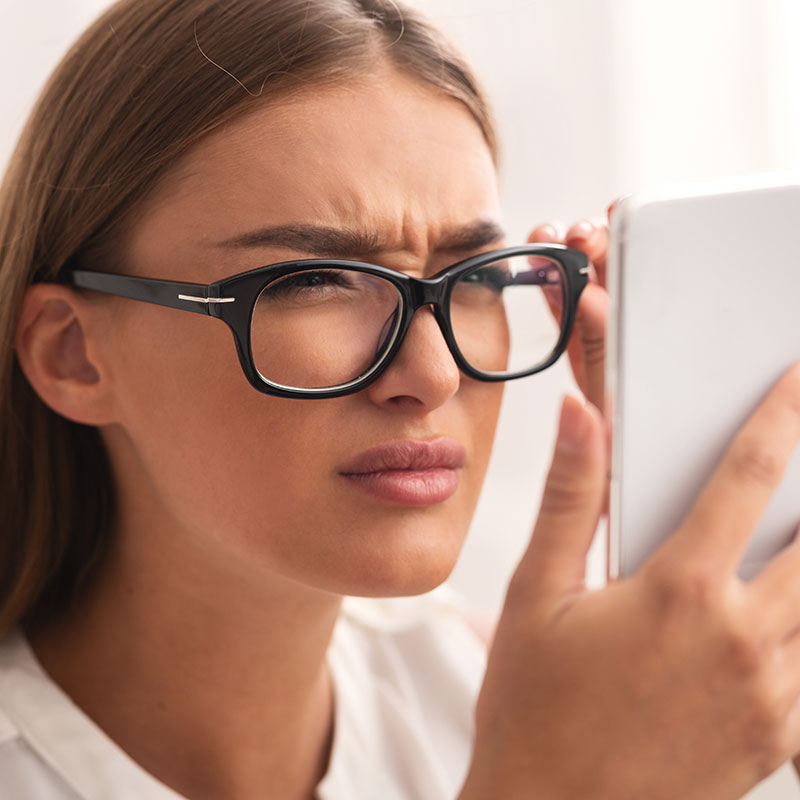
Symptoms of digital eye strain
Sequel lenses can help patients who experience one or more of the following:
- Irritated or dry eyes (even with eye drops)
- Eyes that feel tired, heavy, or strained after a few hours at a screen
- Blurred vision that comes and goes throughout the day
- Midday fatigue or a general sense of mental fogginess
- A dull headache at the end of a workday
- Trouble concentrating after extended reading or screen time
Most people are told to rest their eyes more often or look away from screens periodically. And while that helps temporarily, it doesn’t address the underlying mechanical problem. The muscles responsible for convergence are being asked to work harder and longer than they were designed to.
How Sequel lenses help with eye strain
Standard lenses correct blurry vision. Sequel lenses do that and more. The Convergence Boost™ technology inside every Sequel lens is a dual-action support system that reduces the workload placed on both sets of muscles involved in screen use.
Support for eye alignment
Sequel lenses feature a built-in optical angle called a base-in prism that gently assists your eyes in staying aligned at near distances. It’s like an ergonomic chair for your eye muscles. It doesn’t do the work for them; it just takes away the unnecessary strain so they can hold their position comfortably all day.
Support for focusing
Sequel lenses also include a subtle power boost for near distances that reduces the effort your eyes have to exert when focusing on screens for extended periods. Less effort means less fatigue over the course of a long workday.
The right lens for your stage of life
Screen fatigue can have different symptoms depending on your age and how your visual system has changed over time. Sequel comes in four lens designs, so the support matches where you are in life.
Students and younger patients (ages 4–24)
Younger eyes generally don’t struggle with focusing, but they still feel the strain of constant screen use. Sequel 0 provides alignment support without additional focusing power, making it ideal for students and young adults who spend long hours on devices.
Early career professionals (ages 25–34)
Full-time screen work takes a significant toll on your eyes in your late twenties and early thirties. Sequel 38 combines alignment support with moderate focusing relief, addressing the midday fatigue and end-of-day blurry vision that is common for people in screen-heavy careers.
Patients in their mid-career years (ages 35–44)
In your mid-thirties and forties, the eyes begin to lose some of their flexibility (a natural age-related change known as presbyopia²), meaning they have to work harder to focus on screens. Sequel 67 provides enhanced support for both alignment and focusing, designed specifically for this stage when screen fatigue tends to become more noticeable.
Patients who already wear progressive lenses (age 40+)
If you’re already wearing progressives for distance and near vision, Sequel PAL integrates screen support directly into your multifocal design. You get the full range of vision correction you need, plus the added comfort of Convergence Boost™ technology, all in one lens.
Ninety-one percent of patients reported a reduction in digital eye strain symptoms when wearing Sequel lenses.¹
Choosing between Sequel and Neurolens
Both lenses are built on the same science of visual alignment. The difference is who they are designed for.
The Sequel lens is for patients managing everyday screen discomfort that builds throughout a long workday. Neurolens is for patients dealing with something more significant: chronic headaches, migraines, or neck and shoulder pain that is linked to how the eyes are working together. Our eye doctors can help you decide on the best option for your unique vision needs.
VSP coverage for Sequel lenses
One of the most significant advantages of Sequel lenses is accessibility. Unlike specialized medical lenses that typically require an out-of-pocket investment, Sequel lenses are VSP covered lenses. This means most patients with VSP vision insurance can apply their existing benefits toward the cost of Sequel lenses.
How we prescribe Sequel lenses
Sequel lenses can be prescribed as part of a standard comprehensive eye exam at either TrueVision Eye Care location. There is no separate consultation or specialized testing equipment required.
TrueVision Eye Care is currently accepting new patients at both our Raleigh and Morrisville locations. Our eye doctors can help determine whether Sequel or another binocular vision option is the right fit for your lifestyle and visual needs. If you’re due for an annual exam, ask about Sequel at your next visit.
Frequently asked questions about Sequel lenses
How do I know if Sequel lenses are right for me?
If you notice eye fatigue, blurry vision, or headaches after long periods of screen use, even with a current prescription, Sequel lenses may be a good option. Our eye doctors can help determine if they fit your visual needs.
Do Sequel lenses replace my regular prescription glasses?
Yes, Sequel lenses are designed as an everyday lens that can replace your regular prescription glasses. They provide full prescription correction while also helping reduce eye strain from screen use.
Will I notice the difference right away?
Many patients notice improved comfort within the first few days of wear, especially during long screen-heavy workdays. Others experience a gradual reduction in eye fatigue over time.
Can I wear Sequel lenses all day?
Yes, Sequel lenses are designed for full-day wear and can be used for work, school, and daily activities. They’re a great option for patients who spend extended time on digital devices.